
Luck in Sport: A Qi Men Dun Jia Reading of a World Title
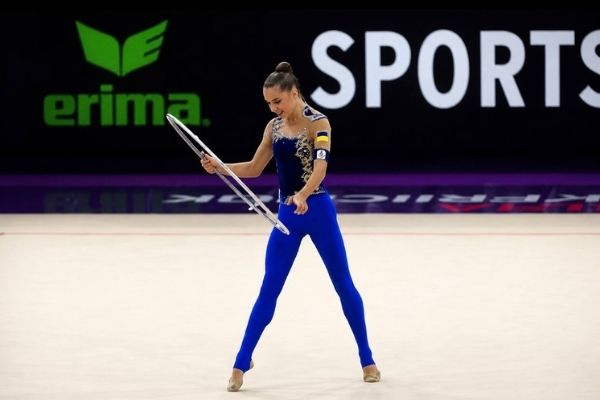
There is a moment in rhythmic gymnastics that has always struck me as a near-perfect illustration of what we call luck. The hoop leaves the hand, rises above the carpet, and for a few seconds the gymnast can do nothing about it. The throw has happened. The catch has not. Behind that flight stand thousands of repetitions, technique and muscle memory — and still, anyone who has watched gymnastics beyond the highlight reels knows that even the greatest sometimes drop the apparatus.
Which raises an uncomfortable question. How can an athlete be superbly prepared, in good form, and still perform below herself on one day and close to her ceiling two days later?
In amateur sport the answer is easy: one trained more, the other trained less. At a World Championship that explanation stops working. Every woman in that final has given years to the sport, and the medal is decided by two tenths of a point.
Two tenths separated Taisiia Onofriichuk from Sofia Raffaeli in the hoop final at the 2026 World Championships in Frankfurt. 30.700 against 30.500. Darja Varfolomeev finished one tenth further back.
I have worked with Chinese metaphysics for twenty-three years, so after events like this I look at more than the protocol. I look at the time.
Not in order to announce, after the fact, why she won. That is the easy part — once you know the result, you can almost always bend an explanation to fit it. What interests me is whether the same meaning repeats across different parts of a chart, or whether I am simply looking at one attractive coincidence and wishing it meant something.
In this final it did not stop at a coincidence.
Two performances, one carpet
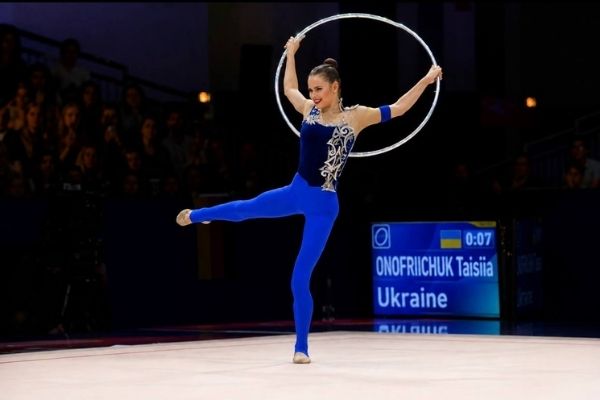
Frankfurt was worth examining precisely because these were not athletes of different classes. Sofia Raffaeli is one of the strongest gymnasts in the world. Taisiia Onofriichuk belongs to the same circle. For her, the question is not whether she can deliver a world-class routine, but which version of it a particular final will produce.
That distinction matters. If you compare an Olympic champion with a beginner, no metaphysics is required to explain the result. But when several world-class gymnasts step onto the same carpet and the outcome fits inside a few tenths, the time of the event itself becomes worth looking at.
In Qi Men Dun Jia, time is not treated as an empty container. Each two-hour period carries its own configuration, and that configuration can interact very differently with different people.
The idea takes some getting used to in the West. We are careful about who we work with, where we live, where we put our money, which doctor we see and then we treat time as a blank square in a calendar. Tuesday at three, because Tuesday at three was free.
In the Chinese tradition, *when* is as much a part of an event as who, where and what.
So I built the charts for both performances.
The bird returns to the nest
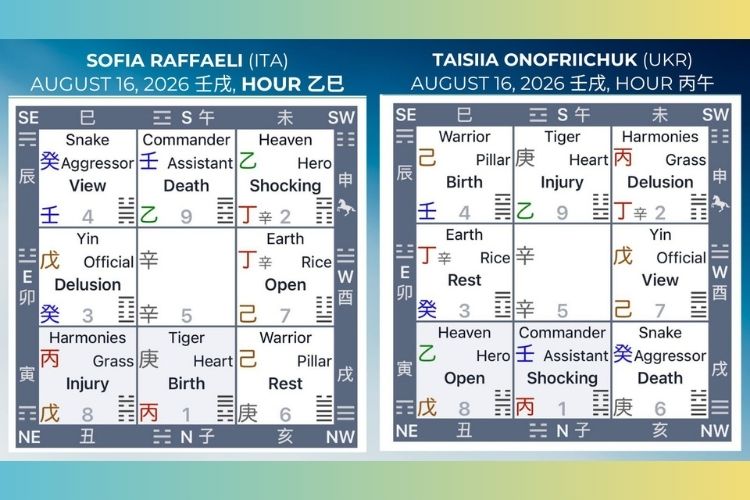
The most interesting thing appeared at the single point where the two gymnasts’ personal indicators meet directly. There is only one such point in the chart. Above a combination traditionally considered highly favourable stood Taisiia’s indicator.
That combination carries an old image: the bird returns to its nest.
I am cautious about reading ancient images literally. A good part of a practitioner’s work consists of not seeing, in every symbol, a beautiful confirmation of a result you already know. But the association here was too exact to ignore.
For a discipline where half the work is throwing an object and catching it in the one correct fraction of a second, the image is close to literal.
Even so, on its own it would not have convinced me. Anyone who has practised long enough knows how dangerous it is to fall in love with a single elegant coincidence.
So I went further and looked at what was happening around Sofia’s indicator.
That is where it became genuinely interesting.
In several places, the same theme kept surfacing — restricted expression. The images differ; the meaning converges. Something fails to reach its target. Something is caught. Something closes and cannot come out into the open.
This does not mean Sofia was weak. A score of 30.500 does not permit that reading at all, and that is exactly why the example is worth having. Here is a gymnast of the highest calibre who lost gold by two tenths. Nothing happened to her talent in those minutes. The question was how fully it could get out.
Talent can be present and still stay inside
There is one more detail I would single out. Qi Men Dun Jia has three special indicators known as the Three Wonders. The name sounds impressive, sometimes too impressive, so I prefer to look at what they do.
They do not create ability that isn’t there. No favourable chart will give a gymnast coordination she h as not trained for, and none of it replaces the years of work. What these indicators tell me is something narrower: how freely an existing resource can travel from inside the person to the visible result.
In Taisiia’s hour, that channel was clearly open. In Sofia’s, part of these indicators fell into what the tradition calls the vault.
“Vault” is a precise word for the situation. The resource has not disappeared. It is there, inside and difficult to reach from outside.
I have met this well beyond sport. A strong specialist walks into a negotiation and cannot articulate a point that is obvious to her. Someone with an excellent project gives a poor presentation. An entrepreneur has almost the same conversation with a different partner a month later and gets an entirely different outcome. We usually put this down to mood, confidence, chemistry between people. Sometimes that is exactly what it is.
But when situations like these start clustering around particular configurations of time, I no longer find it reasonable to call all of it chance.
Where I draw my own line
I dislike it when metaphysics is made to sound more certain than it is. It usually achieves the opposite.
I cannot claim that Taisiia scored 30.700 because of a favourable chart. Still less can I claim she would not have won without it. We cannot run the final a second time under identical conditions and change only the hour, which means causation cannot be demonstrated here.
Qi Men Dun Jia will not give you a score to the tenth in advance. A chart does not override physical condition, execution, psychological state, judging decisions, what a rival does, or the dozens of circumstances an outside observer knows nothing about.
I use it as one additional layer of information about reality, not as a substitute for it.
Over twenty-three years I have arrived at a fairly simple rule. A single striking combination barely interests me. What deserves attention is when the same meaning repeats independently across several elements of a chart and matches the character of what actually happened. And the harder I have to stretch an interpretation, the less I trust it.
In the Frankfurt final, almost nothing needed stretching.
Why “luck” is too shallow a word
Which is why the word “luck” strikes me as too shallow for what happens here. It carries the flavour of an undeserved gift — as though one person was handed something for nothing while it was taken from another.
In professional sport that is particularly absurd. Put a gymnast in the single most favourable hour of the year: if there are no years of preparation behind her, the hour will give her nothing. She still has to catch the hoop herself.
The Chinese tradition is more precise about this, and I find that precision more useful. What we compress into one word is divided there into three parts.
Heaven Luck is what a person receives at birth and does not choose: physical gifts, disposition, family, the very time of arrival. The gymnast chose neither her body, nor her year of birth, nor the schedule of World Championship finals.
Earth Luck is everything surrounding her: country, hall, coach, environment, the house she sleeps in. This part can be changed, and it is where most of my professional work is done.
Man Luck is what a person does: work, discipline, character, decisions taken. The only part that belongs to her entirely.
The classical view is that the three together make a destiny, and none of them works without the others.
Sport shows this with unusual clarity. Talent without work becomes nothing. Work in poor conditions yields less than it should. And the most favourable hour available brings nothing to someone with nothing to bring into it.
A good moment does not create a result out of thin air. It allows what has already been accumulated to come out more fully. Seen that way, two tenths of a point stop looking like a trifle. Sometimes an athlete’s entire body of work, at one particular championship, fits inside them.
Why I’m writing this if most readers aren’t gymnasts
Because sport offers a luxury ordinary life almost never provides: the result is visible in numbers.
The protocol is mercilessly clear. 30.700 and 30.500. First place and second.
In life nobody posts a score after an important negotiation, an introduction, a launch, a decision. You have to explain what happened yourself. And here people often reach a conclusion that feels logical without necessarily being true: if the result was bad, the decision must have been bad. Not always.
Here is how this looks in practice. An entrepreneur comes to me with five to seven years of history: two partnerships that ended badly, one launch that failed, several good hires, and a contract that once carried the whole business. He explains each case separately — misjudged the person here, misread the market there, plain bad luck the third time.
We start reconstructing dates. Specific days. When th e first conversation happened. When the contract was signed. When the money left the account.
And almost always something surfaces that he had never noticed. The decisions he regrets are not scattered evenly across the calendar. They cluster. Both partnerships that cost him money and nerves began in periods of the same character. The strong decisions fall elsewhere.
He had never seen the connection, because he remembered his deals by content rather than by date.
Which is why it is occasionally worth looking at your own history in two dimensions at once: what you decided, and when you decided it.
Take three important events you later regretted. Do not start by explaining what went wrong, first reconstruct the circumstances. The date. The hour. How much you were being rushed. What had happened in the preceding days. Whether it felt as though the situation had to be pushed through by force.
Then do the same with three decisions that unexpectedly gave you more than you expected.
One coincidence proves nothing. But if a pattern appears, it is worth investigating.
Why this gold weighs more
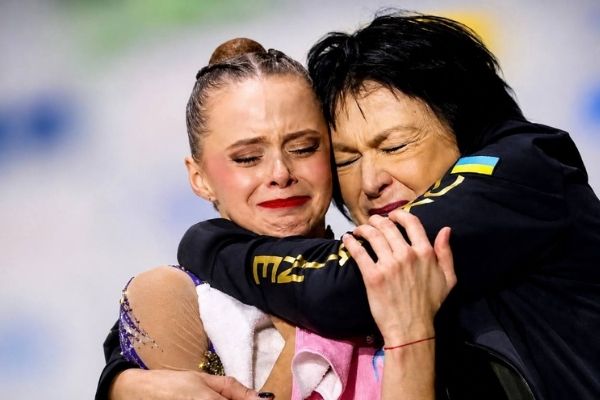
There is one circumstance that appears in no competition protocol.
Ukrainian athletes have now spent several years preparing for international competition inside a country at war. Air raid alerts are part of the training schedule, and not only in Kyiv. Sessions are cut short. Plans change. Athletes work after nights without sleep.
I would not romanticise this. Character does not appear by itself out of hardship. War does not improve preparation, it makes it harder.
Which is why it seems unfair to me to discuss Ukrainian victories as though everyone started from the same line. A gymnast from Ukraine must perform the same routine, survive the same field and meet the same requirements. The road to that carpet is simply longer.
On the sixteenth of August, Taisiia Onofriichuk walked out onto it and scored 30.700 — Ukraine’s first individual gold at a World Championships in rhythmic gymnastics in thirteen years.
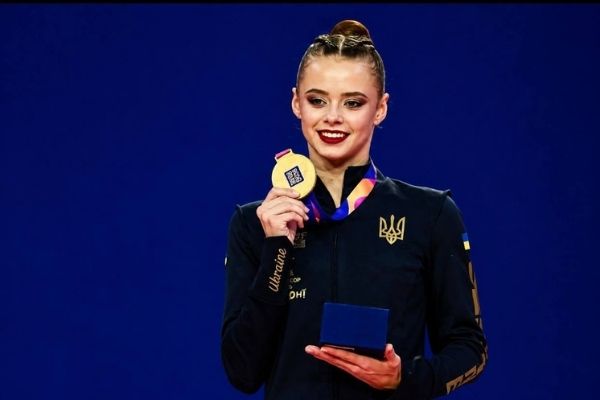
You could say she got lucky that day.
I would put it differently. To make use of a good moment, you first need something to bring into it. Taisiia brought years of work, talent, preparation and the ability to hold her nerve in a World Championship final. And then the rare thing happened, the one I have learned to value most in this work: a person was ready at exactly the moment when circumstances did not stand in her way.
She still had to catch the hoop herself.
Frequently asked questions
Can you determine a lucky day for an athlete in advance?
You can examine the configuration of a day and an hour and see stronger and more difficult periods. Promising a victory on that basis, however, is not professional. The result depends on preparation, the athlete’s condition, rivals, judging, and many variables a chart does not override.
Does this mean timing matters more than training?
No. Without preparation, working with time loses most of its meaning. A favourable moment helps realise existing potential, but it has nothing to bring out if the foundation isn’t there.
Can you choose the timing of a competition?
Usually not, which is exactly why sporting events are interesting to study rather than to plan. In ordinary life the choice usually does exist: negotiations, a business opening, a signing, a launch can all be scheduled on different dates — and there, working with time has practical application.
How do you tell a pattern from a coincidence?
From a single event you cannot. I look for repetition. The more I have to explain away what doesn’t fit, the less an interpretation is worth. A strong reading begins where several independent elements of a chart point to one conclusion without being forced.
Natalia Zhuravel
Chinese metaphysics practitioner, 23 years of practice


